|
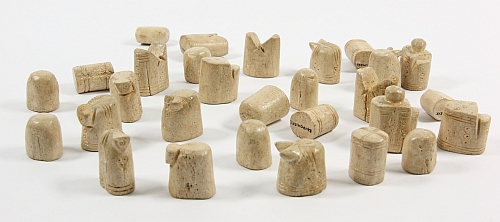
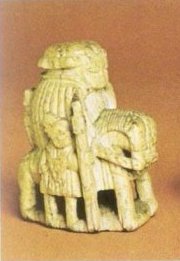
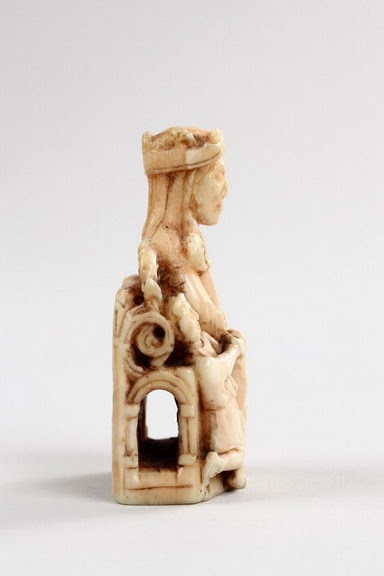
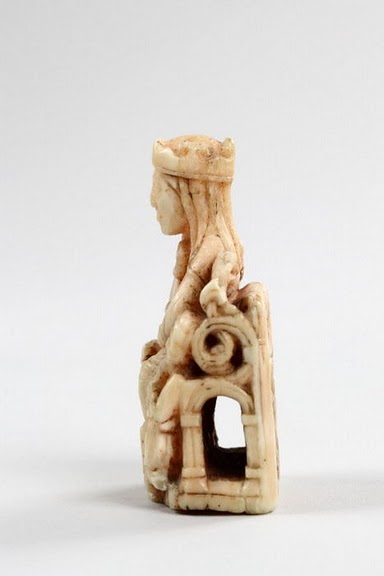
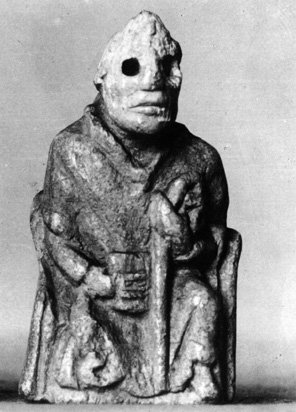
Many mediaeval chess
sets or isolated chess pieces have been found in several places
of Europe. There are two kinds of design: abstract design and figurative
design.
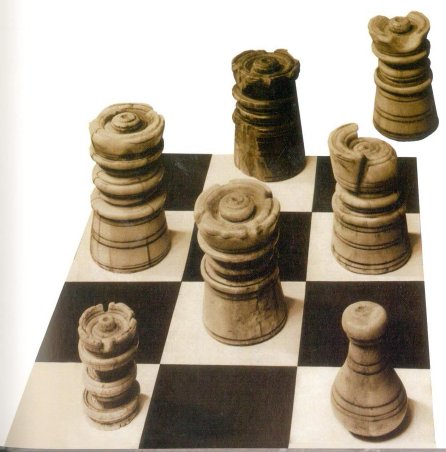
Abstract Chess Sets
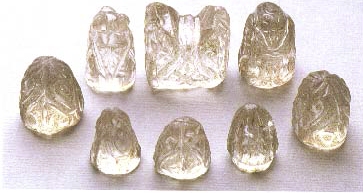
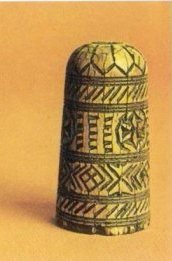
Abstract design has been inspired by Muslim
design. Actually, many abstract sets found in Europe are in
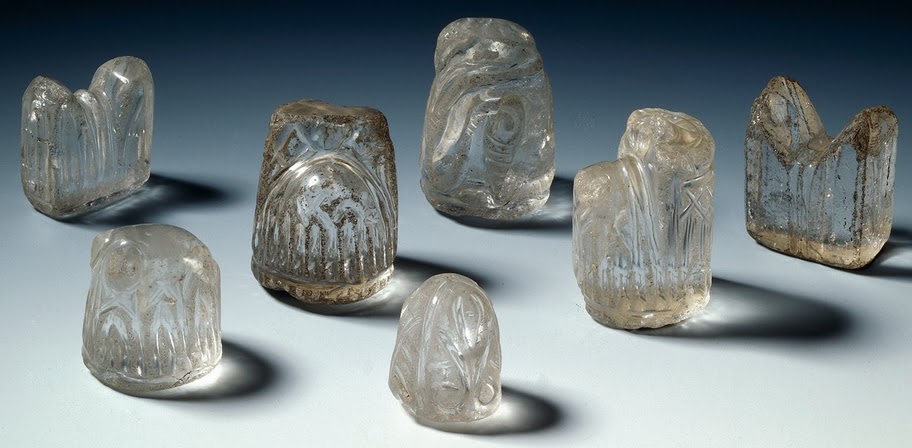
fact of Muslim manufacturing. This is for example the case with
many sets made of rock crystal which have been manufactured in the
Fatimid Egypt.
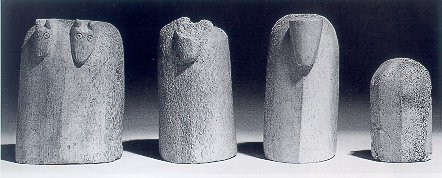
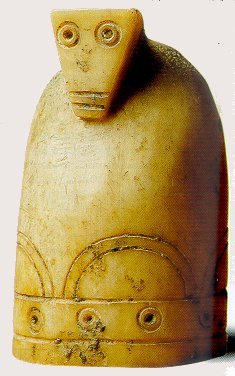
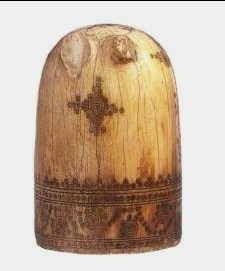
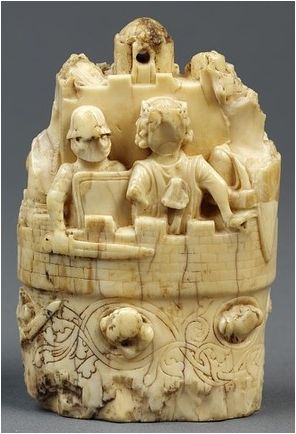
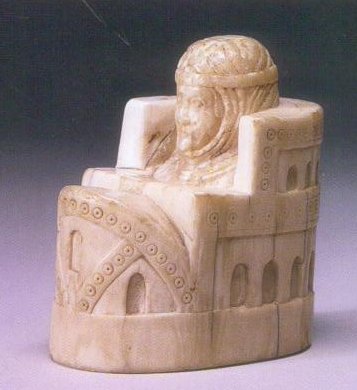
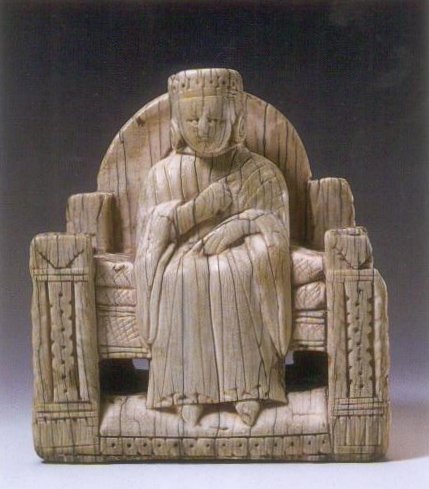
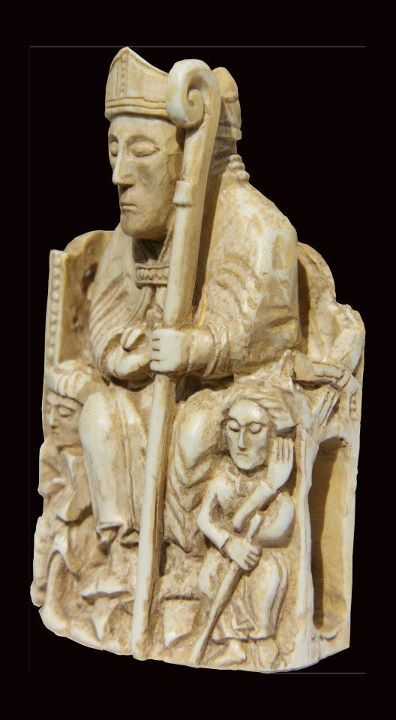
Generally, this design shows Kings with the shape of a throne,
Queens very similar but smaller, Bishops present two small protuberances
which are the forgotten reminiscence of the Elephant's tusks, Knights
have a single protuberance representing the head of the Horse and
the Rooks present a V cut on the top, which has been interpreted
as a bishop's mitre in several European regions. Pawns usually have
a simple shape.
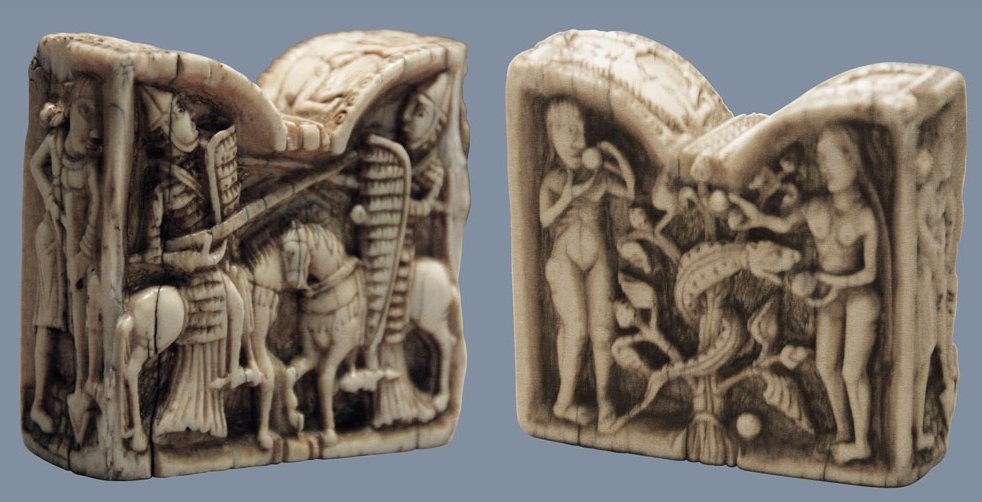
Some abstract pieces are finally not abstract at all as the artists
have carved them with so many details that they are as informative
and elaborated that the figurative sets.
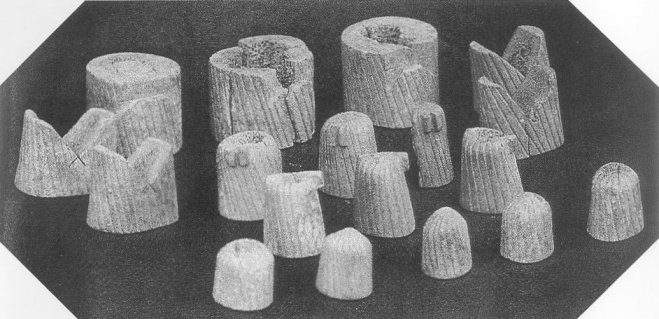
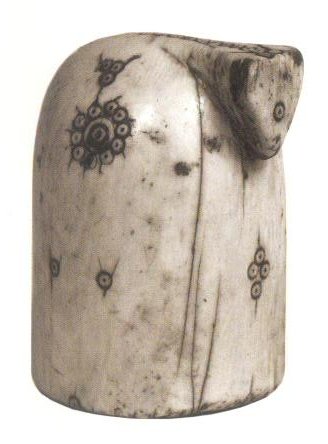
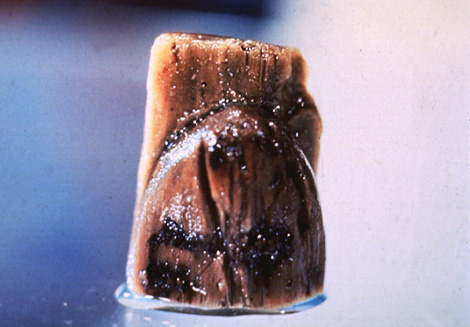
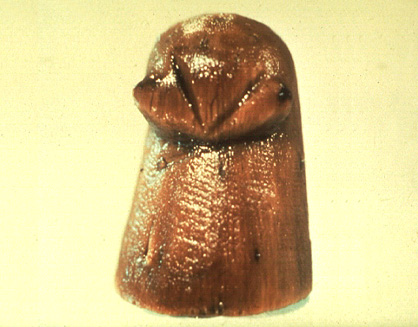
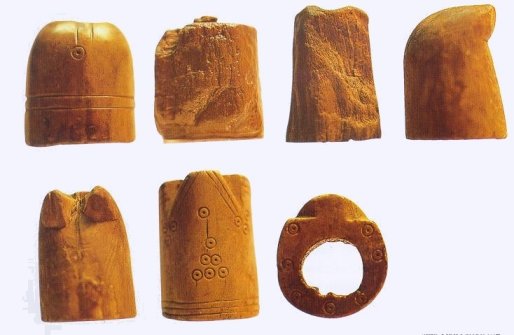
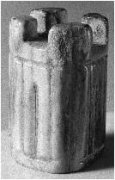
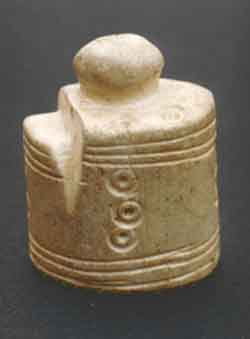
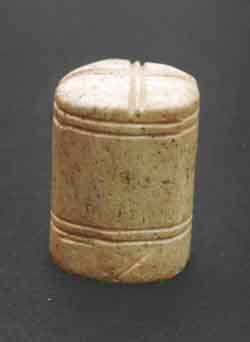
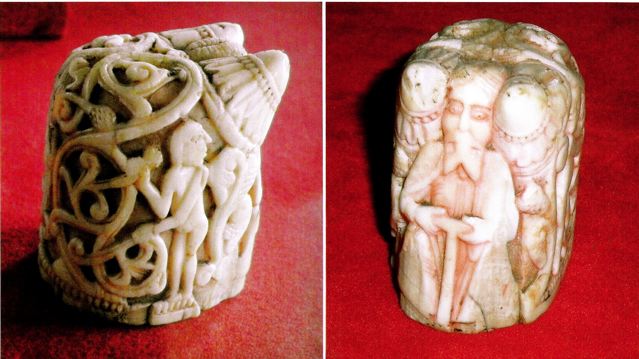
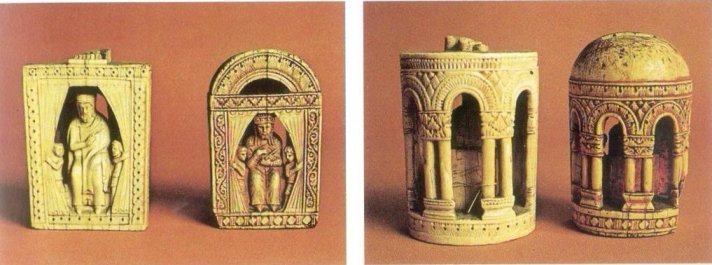
 Mozarab chess pieces known as "the
pieces of San Genadio". Ivory. Once preserved in
the Mozarabic monastery of Santiago de Peñalba
(Leon/ Spain), now in a monastery in Ponferrada. Dated
at least from the first years of the 10th century, and
very likely from the 9th century. (Many thanks
to Miguel Angel Nepomuceno. Miguel Angel Nepomuceno
is the investigator who found those 4 pieces, the most
ancient chessmen in Europe, in 1958. He took the photograph
(left) which has been utilized by the regretted Dr.
Calvo in his subsequent papers. Those pieces had been
first described and photographied in 1923 but had then
diseappeared until their new discovery in 1958).
|
 Pieces
from San Rosenda de Celanova (province of Orense, Galicia,
Spain), rock crystal, 10th c.  Pieces
from San Millan de la Cogolla (La Rioja, Spain), rock
crystal, 10th c.
|
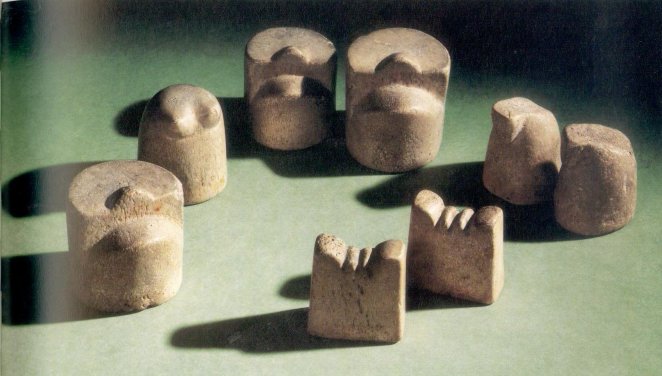
 The
Ager set: Mozarab chess set,
rock-crystal, Museu de Lleida Diocesa I Comarcal, Spain,
late 9th c - beg. 11th c.
|

King and Queen from the same set
found at church of San Pere of Ager near Urgel, Catalonia,
beg 11th c.
|

Rook, rock-crystal, Late 9th - beg.
11th c., Domschatzkammer, Osnabrück


Osnabrück set, wrongly said "Charlemagne"
(another one!), rock-crystal, 12th century (or 10th?.
(Photo Leo Hovestadt, Picasa)
|
 Whale
bone chessmen, Late 11th c., found at Witchampton,
Dorset
|

Knight found in Europe (where?) and made
in Arabic style, 8th-9th c. (!?) according to C. Schafroth
, ivory, Musée du Louvre, Paris
|

King (?), deer bone or antler,
end of 10th c., found at Loisy, Musée
des Ursulines,Mâcon |

Scandinavian (?) Knight, deer antler,
9/10th c., found near Chatenois (Alsace, France),
Musée de Cluny, Paris
|
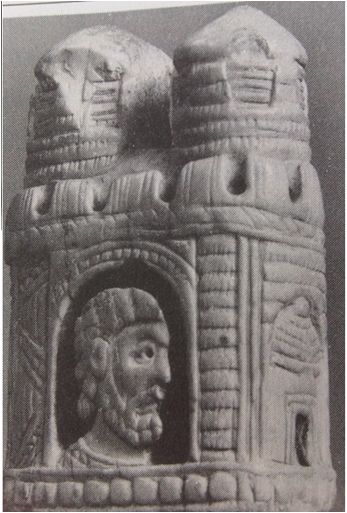
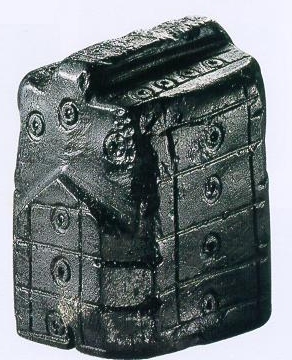
 Rook, from castel of Freteval, Loir et
Cher, France (thanks to François Houdebert).
|

Same piece with a better view to this
strange face on the side
|
 Rook, deer bone, 978-1070, Pineuilh, Gironde, France
|

Kneeled piece (Pawn?), 978-1070,
Pineuilh, Gironde, France
|

King or Queen, Cluny, France
|

Queen, hazeltree wood, 1008-1010,
Paladru Lake Colletière,
Charavines, Isère, France
|

Aufin (Bishop), wood, 1008-1010,
Paladru Lake Colletière, Isère, France
|

Rukh (Rook), bone, 1008-1010, Paladru
Lake Colletière, Isère, France
|

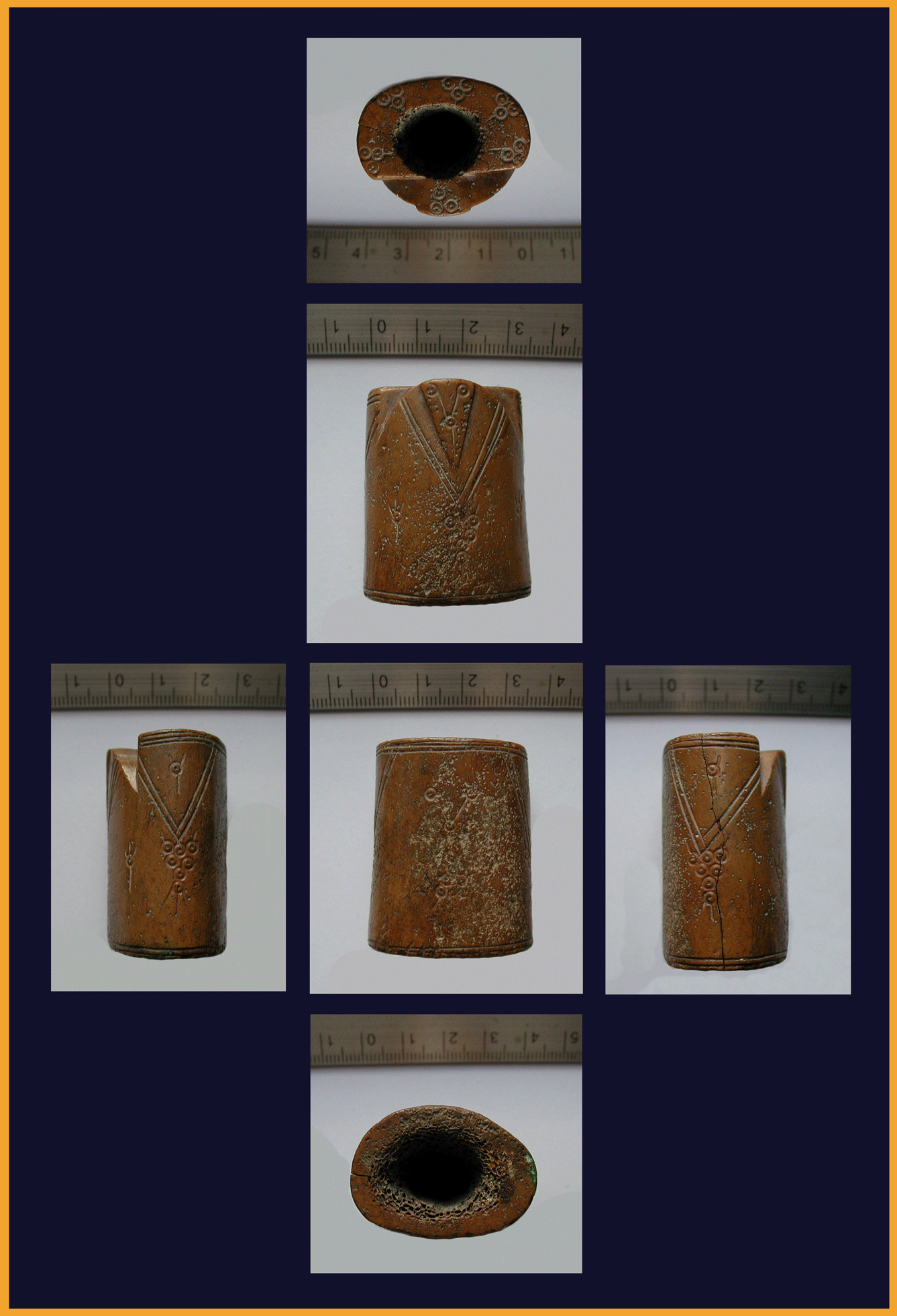
Chess piece from a private collection.
Bone. Maybe a King or a Queen. See beside for more views.
Estimated 11th c.collection (Collection Nicolas
Devigne)
|

|

Scandinavian Chess pieces, bone,
Beginning 11th c. (or 12th?), Nuremberg, Germanisches
Nationalmuseum |

Scandinavian Knight, Bishop, Pawn,
deer bone, Beginning 11th c., Nuremberg, Germanisches
Nationalmuseum
|
 A
Chess Pawn (?), Nassington, Tithe Barn Museum, UK
|

Knight, red deer antler, 12th century, Malting,
Museum of St Albans Hertfordshire, UK
|

Islamic-style Elephant (Bishop), Spain
or Sicily, 12th c., ivory The Metropolitan Museum
of Art
|
 Alfil (Bishop), wrongly announced as
a Knight, castel of Mataplana, circa Ripoll, Catalunya, Spain,
13th c., ivory, (thanks to Alejandro Melchor)
|
 The same piece and a dice, castel of
Mataplana, circa Ripoll, Catalunya, Spain, 13th
c., ivory (thanks to Alejandro Melchor)
|

Chessmen excavated from river Thames,
England, 13th c : bone King, wood King, unidentified
(Queen?), Bishop on top. Bishop, bone King side and
above view showing the hollow.. |
 Rook, Lower Rhein, Germany, 11th century
|
 Rook, UK, 12th century
|
 Rook, UK, 13th century
|
 Rook, Utrecht,
The Netherlands, 13th century
|

King Sandomierz, Poland
|
 Pawn
Sandomierz, Poland
|
 Sandomierz Chess pieces,
deer bone, end of 11th c. or beginning of 12th,
Disctric Museum, Sandormiertz,
Poland
|
 Very
beautiful Scandinavian Bishop, narval tooth, 12th century
(courtesy of Rodolfo Pozzi)
|

Bishop, "sea ivory", Collection Jean-Joseph
Marquet de Vasselot, England or Germany, 12th century
(the ivory has been dated between AD 790 and 990
at 95% by carbon 14) (photo Christie) (Société
des Amis du musée de Cluny)
|

Scandinavian or German Chessmen,
deer bone, found at Ilot des Deux-Bornes, around Noyon,
Oise Beg 12th c., Musée du Noyonnais, Noyon,
France
|
 King,
ivory, 11th c., South of Italia Musée
du Louvre, Paris
|

French Roc (Rook),
both faces, elephant ivory, Mid 12th century, Musée
du Louvre, Paris |
 King,
Museo Nazionale del Bargello, Florence, Italy
|
 Rook
(Pawn?), Museo Nazionale del Bargello, Florence,
Italy
|
 
King (also said as Knight), ivory,
12th c, France Museo Nazionale del Bargello, Florence,
Italy
|

Rook (Tower), ivory, late 11th c (or
14th?).,Italy Museo Nazionale del Bargello, Florence,
Italy
|
 Common chess set from end of 14th c.,
morse and sperm whale ivory, Scandinavia, Musée
National du Moyen-Âge, Cluny, France |
 King
or Queen (?), Yorkshire, England, 14th c.
|
Figurative Chess Sets
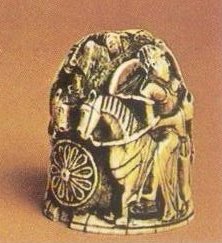
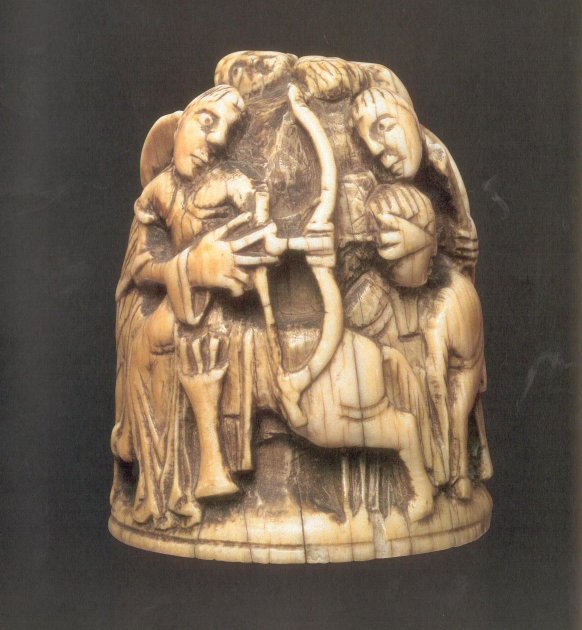
 Chariot,
deer bone or antler, 10th c., found at Loisy,
Musée des Ursulines,Mâcon
|

South Italian Elephant, elephant
ivory, Late 11th c., Musée du Louvre, Paris
|

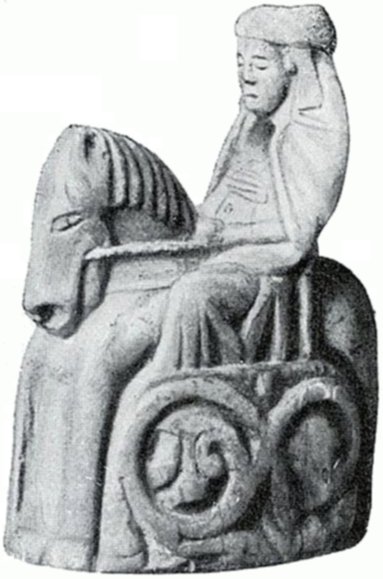
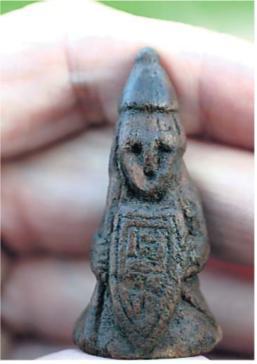
Swedish Queen, 11th century
|
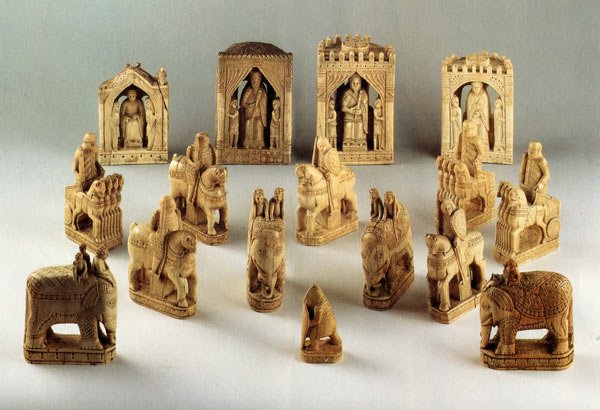
 The "Charlemagne set", elephant ivory, South Italia, Late 11th
c, Bibliothèque Nationale - Cabinet des
Médailles, Paris
|

South Italian Kings, black and
red, front and back-side elephant ivory, beg. 12th
c., Museo Bargello, Florence, Italy
|

South Italian Vizier, elephant ivory,
Beginning 12th c., Bibliothèque Nationale
- Cabinet des Médailles, Paris
|

Queen, Spain, an Kings, ivory,
12th c., Wlaters Art Museum, Baltimore, USA
|

South Italian Queen, ivory, Beginning
12th c., Staatliche Museen zu Berlin - Preussischer
Kulturbesitz, Skulpturensammlung
|

|

|

|

|
Scandinavian
Bishop, walrus ivory, Trondheim, Norway, 1150-1200,
(thanks to Emile Lhomme) (Property of M.E.T.) |

German King, bone or antler, found
at Dorf Langenbogen near Mansfeld (Saxony) Mid 12th
c., ex-von Hirsch coll.
|

Norvegian King, walrus ivory,
Late 12th c., Musée du Louvres, Paris
|

|

|
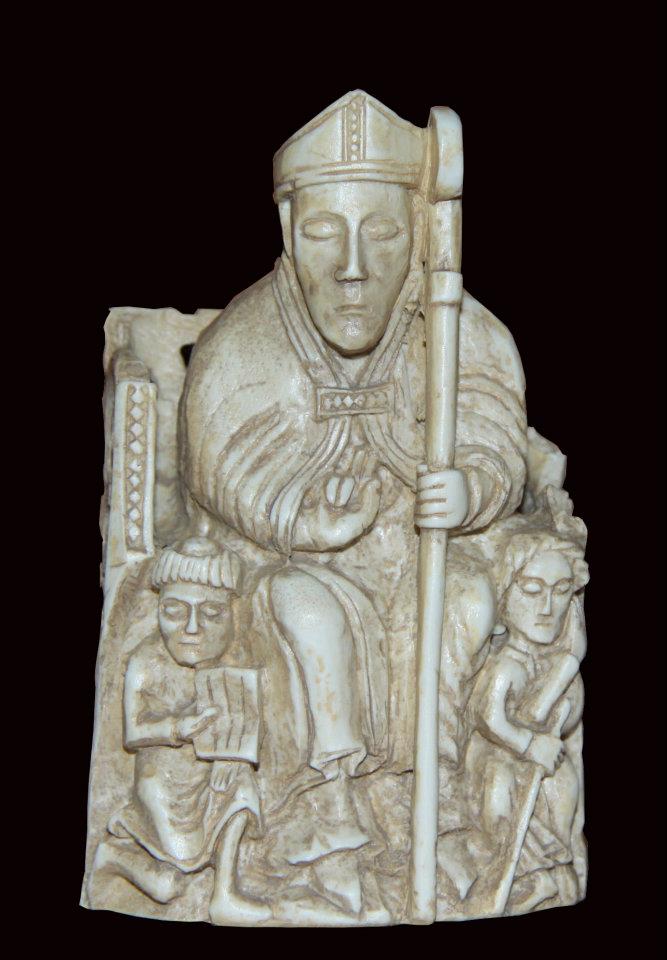
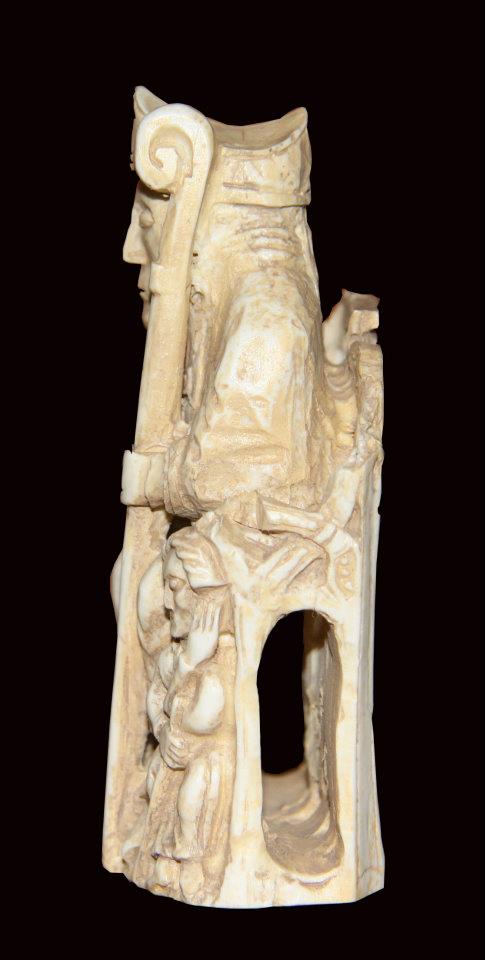
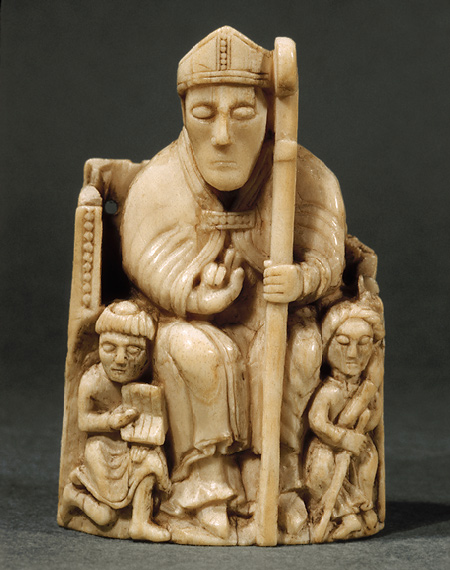
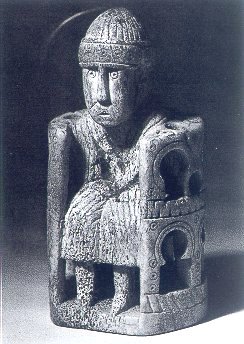
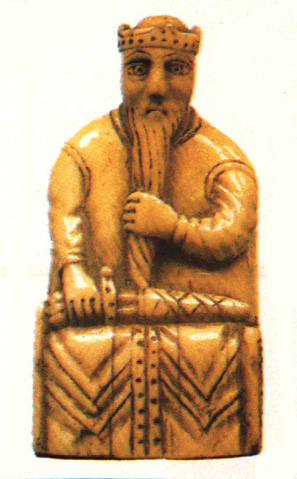
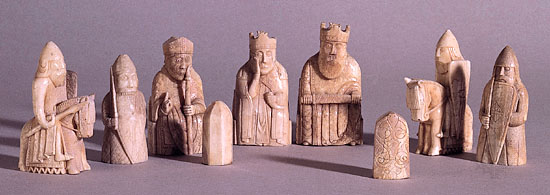
The
"Lewis
set", King, Queen,
Bishop, Knight, Warder, Pawn., walrus tusk Scandinavian
(Trondheim ?), Mid 12th c, British Museum, London |

|

|

|
Scandinavian
Chess pieces: King, Knight, Knight Museo Nazionale
del Bargello, Florence, Italy |

|

|

|

|
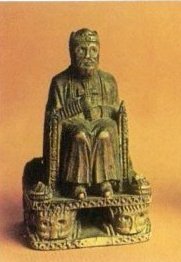
Seated
figure of the Church (Ecclesia), walrus ivory, North
Germany or Scandinavian, 13th century, Staatliches
Museum Schwerin (thanks to Alain Truong) |

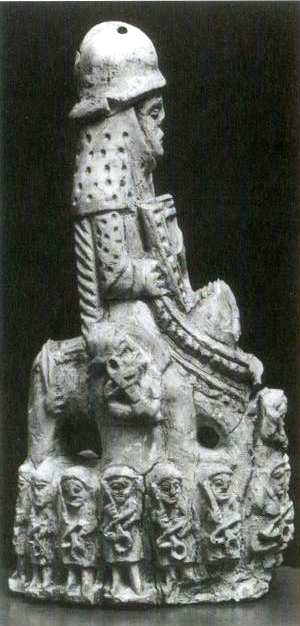
Scandinavian Bishop, walrus ivory,
Beginning 13th c., Copenhagen, Nationalmuseum
(The holes in the eyes were filled by jewels)
|

Knight, walrus ivory, England, 13th
c. Ashmolean Museum, Oxford, England
|

Bishop, ivory, 14th c., Germany
Bayerisches Nationalmuseum Munich, Germany |

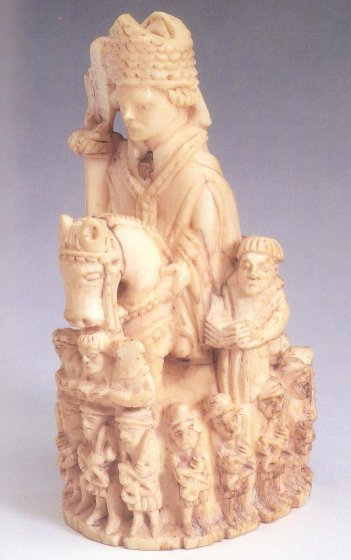
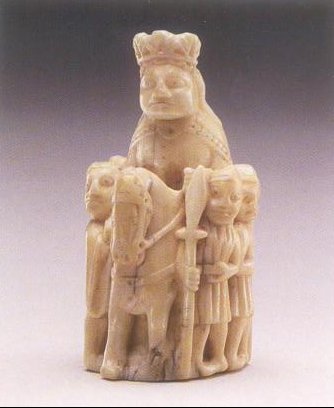
Queen on horseback, walrus ivory,
Denmark, 13th c. Nationalmuseum, Copenhagen |

Queen on horseback, walrus ivory,
Denmark, 14th c. Nationalmuseum, Copenhagen
|

King (I doubt, it should be a Queen),
ivory, 14th c., Danmark Copenhagen, Nationalmuseum
|

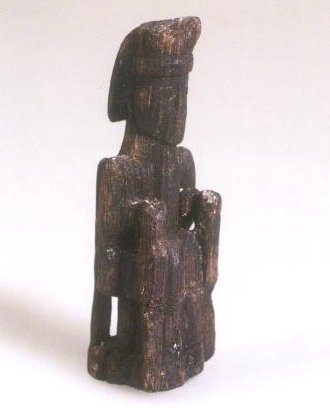
Wooden Queen known as the "Bryggens
Madonna" which has shrinked since it has been exposed
to air, Bergen Museum, Norway
|

The "Bryggens Madonna"
photographied just when it has been exhumed from damp
layers. 14th c., Bergen, Norway
|

Bishop, walrus tusk, Northern Europe,
14th c. Staatliche Museen zu Berlin
|

Knight, Northern Europe, 14th c.
Staatliche Museen zu Berlin
|

King, ivory, Germany, 14th c., private
collection
|

Bishop, walrus tusk, Germany, 14th c.,
Staatliche Museen zu Berlin
|

Bishop, ivory, Southern Germany, 14th
c., Staatliche Museen zu Berlin
|
|